
📺
Non-personalised ads only
The app is declared as child-directed under Google Play's Families Policy. Ad inventory cannot be behaviourally targeted. No remarketing, no demographic targeting, no creepy mid-game recommendations.
Snake. 2048. An infinite climber. A one-tap bird that taught a generation of nine-year-olds how to swear politely. All four rebuilt in Flutter, bundled inside Game Night, no signup, no in-app purchases, and no targeted ads. Hand the phone to a six-year-old and walk away.
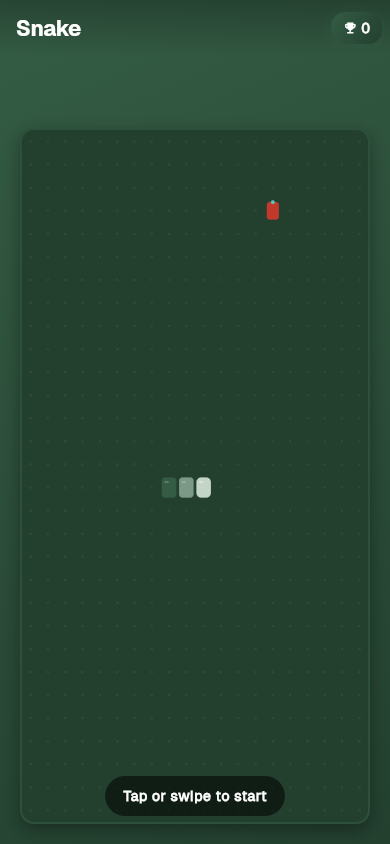
Four games, four entirely different rhythms. Together they cover most of what a kid will want from a phone on a quiet afternoon.
The 1997 Nokia classic, faithfully ported. Swipe to turn, collect dots, grow longer. Crashes into yourself? Try again. High score saves locally.
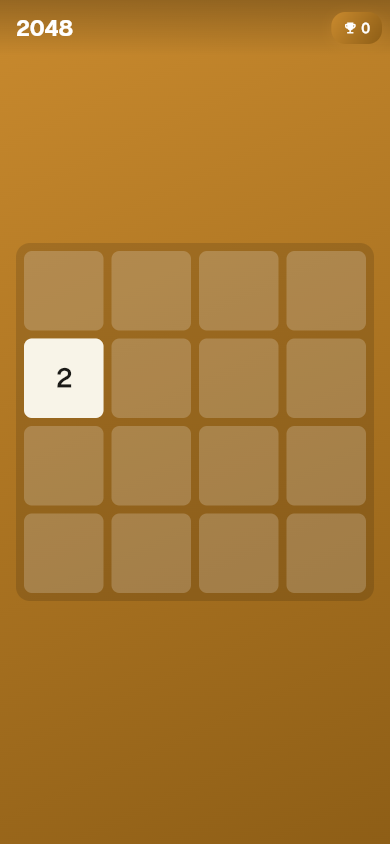
Slide tiles, double them, hit the magic number. Maths-adjacent without ever calling itself a maths game. Most parents finish a session faster than their kids.
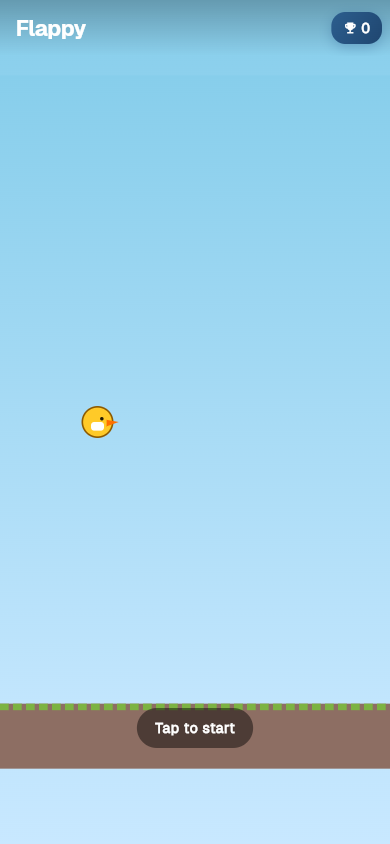
One-tap. Tap to flap, gap to thread. Brutal at the start, addictive by the third try. Our original take on the side-scrolling pipe runner.
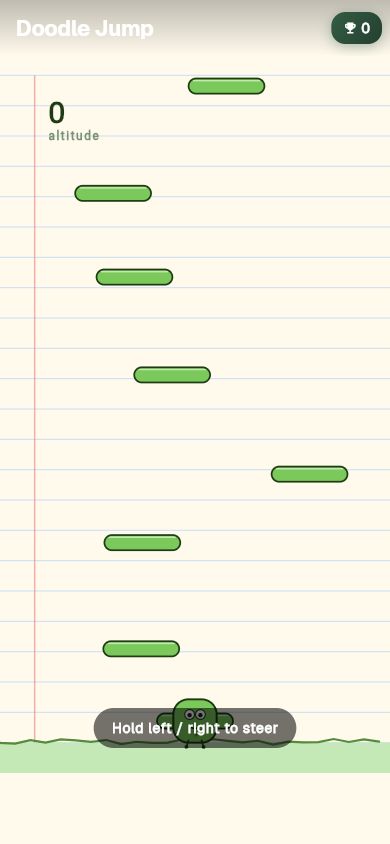
Tilt to steer, jump from platform to platform, climb as high as you can. The Doodle-style infinite climber, with kid-safe pastel art.
Children's psychologist Jean Piaget's stage model of cognitive development puts ages 6 to 11 in what he called the "concrete operational" stage — kids can reason about real objects and rules but struggle with abstract systems and arbitrary modifiers. Almost every commercially successful kids game from the 1980s onward has stayed inside that envelope. Snake has one rule: don't bite yourself. 2048 has one rule: slide and combine.
That simplicity is also what makes them safe. A 2022 review in Frontiers in Psychology tracking attention spans in primary-school children found that games with a single dominant mechanic produced significantly less mid-session disengagement than games with multiple simultaneous mechanics. The kids who played Snake for 20 minutes kept playing Snake for 20 minutes. The kids who played a popular battle-royale clone disengaged on average every 4 minutes.
The classics aren't a compromise. They're the genre that the research literature keeps pointing back to as the right fit for the under-12 brain. Adding tournaments, leaderboards, or chat to them is what turns a focused activity into a fragmented one — which is why we kept the arcade single-player and put the social features into a separate part of the app.
Sources: Piaget, "The Psychology of the Child" (Basic Books, 1969); Frontiers in Psychology, "Game Mechanics and Attention in Primary-School Players" (2022).
Based on our own playtesting plus Common Sense Media's age-appropriateness rubric.
| Age | Best classic | Why |
|---|---|---|
| 5 | Tap-the-bird | One tap is the entire input. Failure is fast and forgiving — three taps later they're trying again. |
| 6-7 | Snake, infinite climber | Swipe and tilt require gross motor control but no reading. Pattern recognition develops naturally. |
| 8-9 | 2048, Snake | 2048 introduces powers-of-two and lightweight planning. Snake builds spatial reasoning at higher speeds. |
| 10-12 | All four + arcade tournaments | Tournaments mode unlocks competitive play in a single-player wrapper — kids can chase a personal best without facing strangers. |
The app is declared as child-directed under Google Play's Families Policy. Ad inventory cannot be behaviourally targeted. No remarketing, no demographic targeting, no creepy mid-game recommendations.
Nothing to buy anywhere. No coins, no power-ups, no "remove ads" subscription. A six-year-old physically cannot accidentally charge your card.
The four mini-games are single-player. Even the broader Game Night chat is gated at 13+, but the arcade goes one step further — there's no social surface at all.
Put the phone in airplane mode and every classic still works. High scores save locally in Hive storage. Long car rides, flights, and load-shedding evenings stay covered.
Two of the most popular kids apps on Android. They're great — at a different job from what we do.
| Feature | Game Night arcade | ABCmouse | Khan Kids |
|---|---|---|---|
| Free, no subscription | Yes | ~$13/month | Yes (non-profit) |
| Designed as arcade entertainment | Yes | Curriculum-led | Curriculum-led |
| Curriculum / phonics / maths lessons | No | Yes | Yes |
| Works fully offline | Yes | Partial | Partial |
| Number of mini-games | 4 classics | 450+ activities | 200+ activities |
| No in-app purchases | Yes | Premium tiers | Yes |
| Plays well as a family bundle | Yes (19 games in app) | Solo | Solo |
ABCmouse and Khan Kids are learning apps. Get them if your goal is curriculum. Game Night's arcade is the throwback-mini-games corner of a wider family-games app — get it if your goal is "let my kid play Snake without dodging six ad networks first".
Talk to parents in their thirties and forties who grew up with a Nokia, an old Mac, or a borrowed Atari console, and the same four titles keep surfacing in their childhood memories: Snake, a sliding-tile puzzle, an endless climber, and a one-tap reflex game. These aren't accidents of nostalgia. They survived because each one solves the same design problem — how to make a single screen entertaining for ten minutes without losing the player.
Showing a kid Snake feels different from showing them a modern in-app-purchase-heavy title. There's no pop-up, no daily-bonus wheel, no character to dress up. The whole game fits on the screen and ends when the snake hits itself. That clarity is what makes the throwback appeal so portable across generations — a six-year-old in 2026 reads Snake the same way a fifteen-year-old in 1998 did.
Yes. All four arcade games and the other 15 games in Game Night are free, with no in-app purchases. Non-personalised ads run between sessions to support development.
Tap-the-bird from age 5. Snake and infinite climber from age 6. 2048 from age 8 once kids handle powers-of-two. None of them require reading skills beyond the start button.
Yes. The whole arcade runs on-device. High scores save in local Hive storage and survive a full app kill. Great for car rides and flights.
No. The arcade is single-player only. The wider Game Night app has multiplayer chat but it's gated to age 13 and above under COPPA.
No — they're our originals, rebuilt in Flutter to match Game Night's visual language. The mechanics are inspired by the public-domain classics; the code is entirely ours.
Free on Google Play. Four classic mini games for kids, plus 15 more family games. No signup, no IAP, COPPA-safe ads.
GET IT ONGoogle Play